Concrete Leveling
Fix sunken or uneven concrete quickly and affordably without the mess and expense of complete replacement.
Why Concrete Sinks and Why It Matters
Concrete does not fail by sinking. Instead, the soil underneath settles or washes away, creating voids that allow the concrete to drop. This happens for several reasons. Poorly compacted fill soil gradually compresses under the weight of concrete. Water erosion washes soil out from underneath slabs. Tree roots decay and leave gaps. Drought causes soil to shrink and pull away from concrete. Once settling starts, it typically continues and worsens over time.
Sunken concrete creates real problems beyond just looking bad. Uneven sidewalks and driveways become serious trip hazards, especially for children and elderly visitors. Water pools in low spots instead of draining properly, causing ice in winter and mosquito breeding in summer. Concrete slabs that settle near your foundation can direct water toward your house, leading to basement flooding and foundation damage. The longer you wait to address settled concrete, the worse these problems become and the more expensive repairs get.
Many homeowners assume they need to tear out and replace sunken concrete. Replacement is expensive, disruptive, and does not address the soil problems that caused settling in the first place. New concrete poured over the same unstable base will likely settle again. This is where concrete leveling offers a smarter solution. By stabilizing the soil and lifting the existing concrete back to its original position, you solve both problems at once while saving thousands of dollars compared to replacement.
How We Level Concrete
Two main methods exist for lifting settled concrete. Both work by filling voids under the slab and raising it back to the proper level. Each method has advantages depending on your specific situation.
Concrete Leveling Techniques
- Polyurethane foam injection for lightweight, precise lifting
- Mudjacking using cement-based slurry for traditional applications
- Soil stabilization to prevent future settling
- Void filling to eliminate empty spaces under slabs
- Joint sealing to prevent water intrusion after leveling
- Drainage improvements addressing the root cause of settling
- Crack repair completing the restoration process
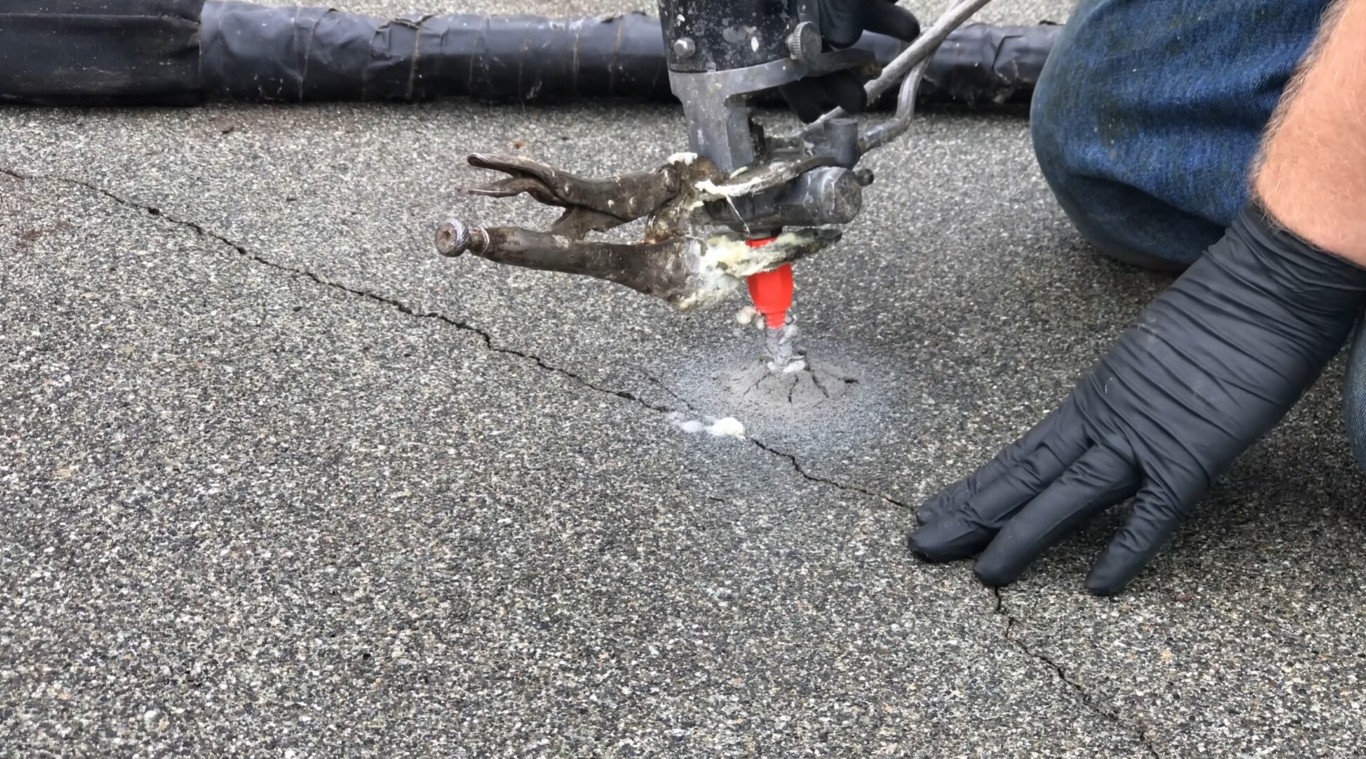
Polyurethane foam leveling has become the preferred method for most applications. We drill small holes through the concrete and inject expanding polyurethane foam underneath. The foam expands to fill voids and lifts the slab back to level. The foam is incredibly lightweight yet strong, adding minimal weight to already settled soil. It cures in minutes rather than hours, so you can use the concrete almost immediately. The small injection holes are barely noticeable after patching, unlike the large holes required for mudjacking.
Mudjacking uses a mixture of cement, sand, and other materials pumped under the slab through larger holes. The material fills voids and provides lifting force. Mudjacking costs less than foam injection but requires larger holes, takes longer to cure, and adds significant weight. For some applications like large commercial slabs or areas where foam might not provide adequate support, mudjacking remains the better choice. We evaluate each project and recommend the method most likely to give you lasting results. Whether you need to level a driveway, walkway, or other surface, we select the right approach.
What to Expect During Leveling
Concrete leveling is fast and minimally disruptive compared to replacement. Most residential projects take just a few hours from start to finish. We can typically complete driveways in one day and have you driving on them the same afternoon. This speed is one of the biggest advantages over replacement, which requires days or weeks from demolition to usable surface.
The process starts with evaluation and measurement. We determine how much each section has settled and identify what caused the problem. Understanding the cause helps us prevent recurrence. We also check for structural damage that might make leveling unsuitable. Not every settled slab can be lifted. If the concrete is severely cracked or damaged, replacement might be the better long-term solution.
Once we confirm leveling will work, we drill injection holes in strategic locations. For foam injection, these holes are about 5/8 inch in diameter. We inject material slowly while monitoring the slab movement with laser levels. Precision matters because we need to lift the concrete to exactly the right height without over-lifting. Over-lifting can crack the concrete or create new problems. Our experience tells us how much material to inject and how fast to inject it.
After achieving the desired level, we patch the injection holes and clean up. The patches blend with the existing concrete reasonably well, though they will be visible up close. Many homeowners are surprised by how quick and clean the process is. There is no jackhammering, no heavy debris removal, no concrete trucks. We arrive with specialized equipment, complete the work, and leave your property clean. The minimal disruption is one reason concrete leveling has become so popular.
We also address the underlying cause of settling whenever possible. If poor drainage caused the problem, we recommend drainage improvements. If tree roots are an issue, we discuss root management. If soil conditions are the culprit, we may suggest soil stabilization. Leveling fixes the symptom, but addressing the cause prevents recurrence and protects your investment.